Review: Aerojones Font 0 to 9 for Real Embroidery Projects
As a designer who spends more time troubleshooting stitch density than actually creating art, I approach every new embroidery file with a healthy dose of skepticism. We have all seen the flashy previews that look perfect on screen but turn into a muddy mess once the needle hits the fabric. That is why I decided to put Aerojones Font 0 to 9 through its paces before recommending it for my own client work or small business inventory. This isn't just about how the letters look in a digital mockup; it is about how they hold up when stitched onto real-world items like tote bags, baby onesies, and custom apparel.
The First Impression: Clean Lines and Modern Utility
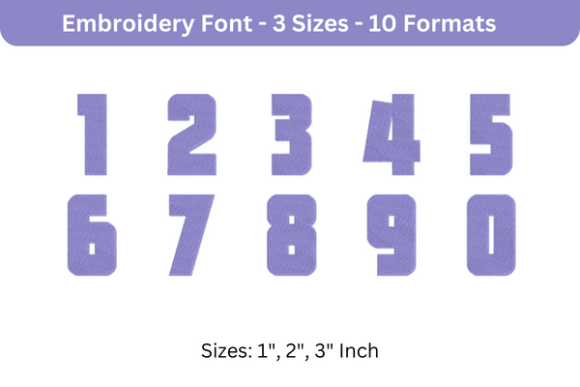
When you first open the design package for Aerojones Font 0 to 9, the immediate takeaway is clarity. Unlike some novelty fonts that rely on excessive flourishes which can get lost in smaller hoops, this typeface feels grounded and functional. It strikes a balance between a handwritten feel and structured geometric precision. The numbers are distinct from one another, which is a critical detail often overlooked until you are trying to embroider a birth year or a graduation date.
The visual personality of Aerojones Font 0 to 9 suggests versatility. It does not scream "loud" or "flashy"; instead, it whispers professionalism. For an embroidery project intended for a boutique product line or a personalized gift, this font offers a clean aesthetic that elevates the perceived value of the finished item. It creates a mood of organized creativity, making it suitable for everything from a nursery wall hanging to a branded apron for a local bakery.
Real-World Scenario: The Custom Tote Bag Challenge
To truly test the capabilities of this font, I simulated a common scenario for many Etsy sellers and craft business owners: preparing a batch of custom embroidered tote bags for a back-to-school sale. The goal was to add a student's name and a specific class year using Aerojones Font 0 to 9. The challenge here lies in the canvas. Canvas is a textured, heavy fabric that can distort delicate stitches if the design is not optimized correctly.
I loaded the machine embroidery design onto my hoop with a cut-away stabilizer to ensure stability during the stitching process. As the machine began to run, the satin stitch edges remained crisp against the rough weave of the canvas. The fill stitch areas did not bunch up, even though the fabric had some give. When I removed the bag from the hoop, the result was sharp and legible. The contrast between the thread colors and the dark fabric was striking, and the numbers held their shape without any warping.
This performance would translate well to other heavy-duty items like denim jackets, sweatshirts, or kitchen towels. Customers looking for a durable, long-lasting personalized gift will appreciate the structural integrity of the lettering. It avoids the "wobbly" look that often plagues cheaper font files, giving your handmade product a polished, commercial-grade finish.
Where to Use (and Where to Think Twice)
While Aerojones Font 0 to 9 performs admirably on standard surfaces, there are specific scenarios where a designer needs to exercise caution. If you are working with very small hoop sizes, such as those used for hat patches or jewelry tags, you must evaluate the minimum size of the numerals. While the font is clear, extremely tiny lettering can sometimes lose definition if the stitch density is too high relative to the available space.
Similarly, stretchy fabrics like jersey knits require extra attention. Even with the best stabilizers, dense embroidery on a stretchy material can cause puckering over time, especially after washing. In these cases, Aerojones Font 0 to 9 might need to be resized slightly larger to allow for the natural movement of the fabric, or you may need to use a tear-away stabilizer in conjunction with a wash-away top layer to maintain the shape.
Dark fabrics present another consideration. Because this font relies on solid fills and satin strokes, you must ensure your thread choice provides enough opacity. A light thread color on a black background might require multiple passes or a higher density setting, which could increase the stiffness of the final piece. Always test your thread color contrast on scrap fabric before committing to a customer order.
Impact on Brand and Customer Trust
In the world of commercial embroidery and digital product sales, the quality of the design directly influences buyer trust. A sloppy font can make a brand look amateurish, while a clean, well-executed typeface like Aerojones Font 0 to 9 signals attention to detail. When a customer receives a personalized gift with crisp, legible stitching, they are more likely to view the item as a premium product.
This font works exceptionally well for branding elements. Imagine a logo on a cap or a monogram on a pillow cover. The consistency of the letterforms ensures that your brand identity remains recognizable regardless of the medium. For digital product sellers creating printable mockups, this font allows for realistic previews that accurately represent how the final finished product will appear. This honesty builds confidence among buyers browsing online marketplaces.
Practical Notes for the Design Professional
Before integrating Aerojones Font 0 to 9 into your workflow, there are several technical steps you should take to ensure success. First and foremost, always test the design on a scrap piece of the actual fabric you intend to use. Fabric texture varies wildly, and what looks good on cotton poplin might behave differently on linen or fleece.
Check your hoop size constraints early. Ensure that the design fits within the dimensions of your embroidery machine's hoop without requiring awkward re-hooping, which can lead to misalignment. Review the stitch density settings in your digitizing software; if the design feels too dense, consider adjusting the underlay or reducing the fill density to prevent bulkiness.
If you plan to sell finished items created with this font, confirm the licensing terms provided by the creator. Some digital embroidery files restrict commercial use, while others allow it freely. Understanding these boundaries protects your craft business from potential legal issues. Additionally, inspect the small details of the numbers closely. Look for any loose threads or uneven spacing that might indicate a need for manual adjustment in your software before production.
Finally, consider the end-use of the garment. Items that will undergo frequent washing, such as baby clothes or work aprons, benefit from robust designs. Aerojones Font 0 to 9 generally holds up well, but proper stabilization and thread selection are key to longevity. By taking these practical steps, you ensure that your use of this font results in a high-quality embroidery project that stands the test of time.
Ultimately, Aerojones Font 0 to 9 is a reliable tool in the arsenal of any serious embroidery designer. It delivers on its promise of personalization without sacrificing quality. Whether you are creating a unique holiday gift for a friend or stocking shelves at a craft fair, this font provides the professional polish needed to elevate your work.